Latest

How to build a marketing agent for production: put the controls in the code that performs the write
Our view: a marketing agent is ready for production only when the controls it depends on are enforced by ordinary code at the point where the write happens, checked at the moment of the write, on every path that can change what a customer sees. When the controls live in the prompt, in a policy document, or in a reviewer's memory, that is where they fail.
Read article →
Our September 17 baseline: Google cited us on 0 of 20 questions
Google AI Overviews cited marketingagent.com on zero of twenty questions in our September 17, 2026 study. This is a snapshot of that context and question set, not an estimate of what every buyer sees.
Read article →
How to use AI in marketing: start with the jobs where a mistake is cheap to catch
Our view: the first jobs to give a marketing agent are the ones where a wrong answer stays inside your team and a person can catch it faster than they could have done the work. That rules out most of the jobs current AI budgets favor.
Read article →
AI agent or chatbot: the label does not price the supervision
Whether a system is called an agent or a chatbot says almost nothing about the oversight it will need. Gartner puts enterprise agent failure down to all-or-nothing governance. Our read: three things price the supervision, and the one buyers can least see is what an approval screen actually shows the person clicking it.
Read article →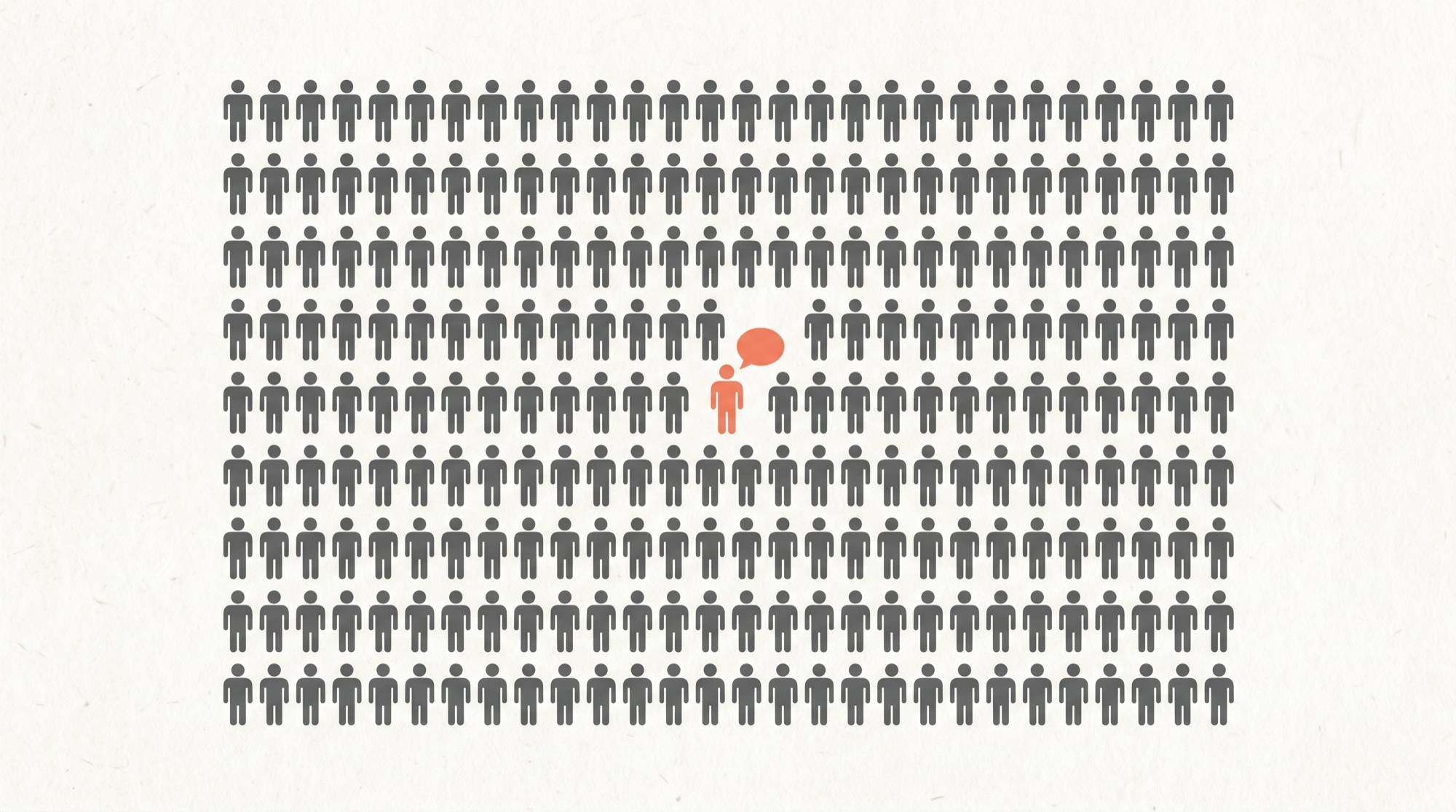
Visitor identification sells you the name. The reason for the visit is not for sale.
Identity resolution reads a silence the buyer chose. Our read: it can tell you which account was in the room, and the reason for the visit still has to come from the visitor, which is why the working instrument is a question the visitor answers.
Read article →
How to buy an answer engine optimization tool: five questions, no rankings
The AI visibility tool market is selling confident scoreboards. Our read: five questions separate an instrument you can audit from a verdict you rent. And because Docket sells in this category, this piece scores dimensions, never vendors.
Read article →
How to measure GEO: an answer-share tracker you can rerun
AI visibility scores are arriving faster than the methods behind them. We argue for a tracker you can rerun, and we run it on ourselves first: a fixed question set, a fixed logged-out protocol, an answer-share score anyone can audit. The pilot run already caught something.
Read article →
GEO vs SEO: the same discipline with a different scoreboard
Marketers keep asking whether generative engine optimization replaces SEO, extends it, or rebrands it. Google says no special optimization exists; Bain says most searches now end without a click. Our read: the work barely changed, and what counts as winning changed completely.
Read article →
What an AI marketing agent is, and the four tests before you call it one
The term is being defined by the companies selling it. But marketing's own dictionary already defined an agent as someone who acts on your behalf within lent authority, which is why the useful question is not whether a system uses AI, but what authority was delegated and what happens at its edge.
Read article →
The 90.3% is mostly pilots. Full production is 23.3%.
The most-quoted agent-adoption number counts anyone who ever ran a proof of concept. Here is what the same survey question actually found, why the report is more honest than its citations, and the figure that should change what you do.
Read article →
Agent hubs are the new app stores. The lock-in is the point
TikTok and HubSpot both opened agent marketplaces this month. The strategic story is distribution economics, not features. The app-store era already taught the lesson: the rules arrive after the audience does. What launched, where the lock-in actually lives, what the hubs genuinely fix, and six questions to ask before your agents move in.
Read article →
Answer engine optimization is mostly answer hygiene
The pitch says AI search demands a new priesthood. The one controlled study and Google's own documentation say most of the work is editorial hygiene: direct answers, cited sources, real numbers, extractable sentences. Here is the checklist, the cadence to measure it, and the two parts that are genuinely new.
Read article →